

as told by David & Noela Nissen
 |
Abridged Story | |
Full Story |
The full version of Odin’s Beach is in two parts; the first was derived from information provided to Ken Gray by Noela and Dave Nissen in 2021, and the record is much edited. The second, is far more entertaining and is a transcription of an interview by Dr. Kathleen Broderick of the Great Barrier Reef Marine Park Authority in 2008.
Only a small part of that is retained in this abridged version, for it is difficult to abbreviate the wondrous adventures told in Dave’s unique North Queensland voice.
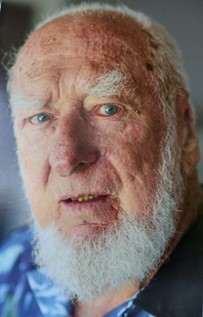
David Nissen, or Dave as most know him, was born in Tully in September 1939 and has lived in this region almost all of his life. His younger brothers, Jim and Bob, were born after the war.
After qualifying as a high voltage electrician, Dave went crocodile shooting for two years, then set up large power stations in Tasmania and Victoria for a time, before returning to work at Cardstone, NQ, to run the Kareeya power station and train others to operate it.
Dave has spent much of his life diving on the Great Barrier Reef and has been on almost every reef on it. He has also explored almost every inch of Cape York and ventured up all of its rivers. He is an honorary member of the Lockhart River Aboriginal Community.
By any definition of the word, Dave is a legend; in Mission Beach and right up to the tip of Cape York. There is a street named after him in Wongaling and that is an unusual occurrence for a living person; Councils’ seldom use names of living people as place names. Nissen Street is where he built a 65 foot fibreglass motorboat (Odin) at the mouth of Wheatley Creek, where he was watched closely by the resident crocodile. Dave has a long history of close encounters of the crocodile kind. He has endless tales to tell and, hopefully, someone will capture them soon. He is always entertaining and is widely known and respected for his knowledge of the Reef and the district.
His WWII stories, mainly gleaned from conversations with his father who served in the Volunteer Defence Corps, are related in an eBook, War and Beach. These are not retold here.
Dave can do anything hands-on: electrical, diesel motors, stainless steel welding, reef diving. He ran the hydro-electric power station on the Tully River at Kareeya for years. Dave was always out on the ocean every spare minute with mates, island hopping and spearing and learned much about our past on such adventures.
Dave’s wife, Noela Nissen, was born in Tully, in February 1942 and qualified as a schoolteacher in Brisbane before going on to become a highly respected Principal at St Clare’s Catholic Primary School in Tully. Here we have an amazingly brave and accomplished woman with an Irish twinkle in her eye, much needed by the wife of ‘David’.
In his early days, Noela said that David was a man of few words and not the cheeky fellow of today. This is a highly successful union with three generations of Nissens, all born in Tully, now making their unique and positive mark on the district.
Dave has strong views on today’s world of political correctness and of people rorting systems or misinforming debates on reef conservation or power generation. He has continually contributed to such debates and has always done all he can to ensure the sustainability of the Great Barrier Reef. He is an astute observer of nature and of events in the community. He and his family have contributed greatly to the district during their years here.
After 30 years of service to education as Principal of St Clare’s School in Tully and another five years at El Arish school, Noela was awarded a Centenary of Australian Federation Medal.
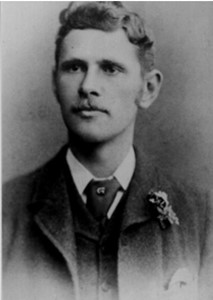
Dave is of Danish descent and one can readily imagine him as a bold Viking. His grandfather, Harry (Hans) Joseph Trules Nissen (1872 – 1941), was Danish. His father, Rolph Nissen, was one of 17 children while his mother, Ruby (Rubina Emma Whitson), was born in Gloucester, England, in 1904 and came to Australia when she was just 16 years old.
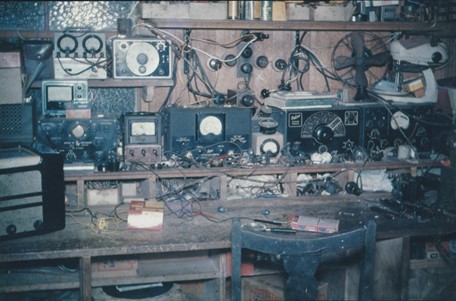
Rolph Nissen was a rabbit shooter in NSW and changed his name to an Aussie version, ‘Ralph’, to fit in. He came to North Queensland in 1936 and soon moved to El Arish and set up a business fixing radios, bikes and gadgets of all sorts.
Noela has little knowledge of her family ancestry, but her father, Andrew Ronan of Tully was Irish from County Clare. He died early, at only 42 years age. Her mother was Elizabeth Unthank from Tipperary County, Ireland. Dave tries to shock people by saying that nothing could kill Noela as she is ‘bog Irish.’ Noela Ronan is as far from being ‘bog Irish’ as anyone could imagine; she is all class to those who know her.
Dave lived at 29 Wilson Street in El Arish and speaks fondly of riding ‘pushies’ (bikes) everywhere. He was the school captain, and anyone who knows Dave understands he could have been anything in life; a brain surgeon was not an impossible dream with his intellect. Inez Campbell was a schoolteacher at El Arish and taught his two younger brothers but did not have the challenge of having Dave in her classes. Dave explains that El Arish was a big place in those days, with three timber mills and a plywood mill, and his father was the number one benchman at Myer’s sawmill. Sixty three people worked there. Mrs Borsato had her store, and the Martins owned the butcher shop; there was a chemist as well.
Dave’s early life was focused on swimming, camping, diving and fishing. He and his mates biked to all the beaches and often camped there. They had a small plywood dinghy with a six horsepower outboard and fish, crabs and Moreton Bay Bugs were aplenty. He remembers riding home with a 76 pound barra on the handlebars. His first near miss with a croc was at Bingil Bay when he was only 12 and was saved when his father shot it.
Dave: Bingil Bay has worn back into the land about 20 metres from the 1950s. There was almost nothing at Bingil Bay then, only the remains of the Cuttens’ house; that was on the hill where the graves are and it had an old grand piano in it. I remember playing that a bit; we were only kids, just mucking around. The old Alexander home was made out of Leichhardt timber and it burned down. Harry Plumb had a home further inland near the site where the gin or rum distillery is today in Butler Street. Old Harry had a long tin shed and it was full of Army K rations. We liked to visit Harry as he sometimes gave us chocolates from the ration tins. At times, Dad pulled in to see Harry in his Ford Prefect ute. He rode an old army Harley Davidson motorbike before he had that.
As soon as I finished high school, I was interviewed by the boss of the power company in Cairns, CREB. He offered me an apprenticeship and I agreed. Four pound and 18 shillings a week pay and accommodation in Cairns cost me five quid. I was lucky, as they were building substations everywhere at the time, so I was never in Cairns and I stayed with an old war widow, Mrs Matthews. Her son, Tuppy (Frank) Matthews died recently after being electrocuted.
Noela: Our family lived in Tully, and when I was five there were only two or three homes at South Mission Beach. It was just a dirt road. We shared a holiday home with the Stuarts. You went up one set of stairs to their place and another set of stairs to our place. It was a long rectangular building with a partition in the centre. In December 1949, a child, Briony McNamara, was killed by a box jelly near that house. The Cliffords came to stay, and they used a tent. The Murphys also had a house a bit further north. No one lived there permanently; they were just holiday homes; very basic.
Dave: Later in life, Noela and I bought four lots on the beachfront at Wongaling and that cost us £4,000 at the time; £1,000 each. Imagine that. That is where we built the Coral Trout Units and had three blocks for the units and sold the fourth one. That recently sold for $860,000. We built a beach house there first and used it for holidays and weekends.
Dave met many of the old early settlers when he was a boy and recalls some of them in the full version of the story. In that version we drove around the streets with Dave recalling places and people, and we probably captured a small portion of what he knows. That’s useful information to help when we are piecing the district’s history together.
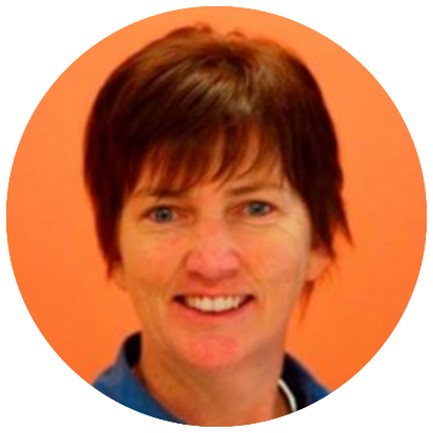
Dr Kathleen Broderick’s interview with Dave in 2008 was one of many conducted with long-term Reef users. She generously allowed us to publish her work in Odin’s Beach. It was merely a 75 minute conversation yet covered so much of Dave’s life and adventures. Kathleen did not edit Dave’s colourful language, so it is an amazingly useful and entertaining record.
Kathleen was highly focused on what the Reef looked like in the old days compared to now. Dave was adamant that while the inner reefs had been devastated over the decades, that the outer reefs retained most of their integrity and beauty. He conceded that the numbers of fish had declined dramatically, apart from difficult to catch species like Black Spot Tusk Fish. He thought that the inner reefs were destroyed by silt from farms yet felt that run-off from herbicides and leaf wetters played a big part too. He explained that coral bleaching only happens on shallow parts of reefs, and while videos show large tracts of white coral, that was always there. He maintains that there was always only 20% of the Reef that was rich and colourful, so we should not be fooled into believing the myths that the outer Reef has been destroyed in recent years.
Dave is no flat-Earth conspiracy theorist, burying his head in the sand, as he is acutely aware of the impacts that humans have the planet. However, he desperately wants scientists to stick to the facts and to accurately observe and record nature by getting out there, not just sitting behind desks inventing stories that fit the latest politically-correct agenda.
Author: Ken Gray. Editors: Margaret Remilton and Diane Bull.
 |
 |
 |
 |
 |
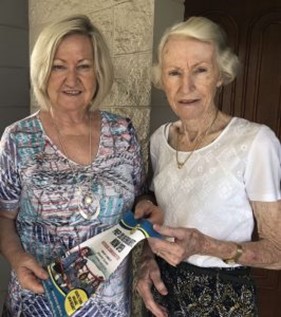
David Nissen 2022; Noela Nissen, right, with her sister Marcia Courtice; Dr Kathleen Broderick: GBRPMA interviewer 2008;
Harry (Hans) Nissen, Dave’s Danish grandfather; Radio and electrical repair workshop of Ralph Nissen, El Arish.
Told by David and Noela Nissen, South Mission Beach. Interviews by Dr Kathleen Broderick (2008) & Ken Gray (2021).
Published by Mission Beach Historical Society, Document AB18, Version 1.0. Web address: mbhs.com.au
This publication is copyright © Mission Beach Historical Society 2022. First published 2022.
Apart from fair dealing for the purposes of private study, research, criticism or review as permitted by the Copyright Act, no part of this work may be stored, reproduced or transmitted in any form or by any means without written permission. Inquiries should be addressed to the publisher. A record of this title is held at the National Library of Australia (Ebook) and the State Library of Queensland (Print and Ebook). The text and opinions expressed in this book are those of the author and of people interviewed by the author, and do not reflect the views of the Society or its members.
Mission Beach Historical Society’s logo is designed by Leonard Andy, copyright © Leonard Andy. The design depicts a Djiru shield with a cassowary which is the endangered, iconic flightless bird living in the north Queensland rainforests. The histories published by Mission Beach Historical Society are as accurate as we are able to make them. Few accounts of history are 100% correct and there are going to be more errors when we recall events of many years ago. We always welcome suggested edits, additions or deletions. This is an abridged version, the full story with references is available on our web page as H018, also named Odin’s Beach.
Cover Image: Mission Beach, looking across to Dunk Island. There was just one coconut tree on the full 11 kilometre stretch of Mission Beach when Dave and Noela first built on the beachfront there.
|
Abridged Story | |
Full Story |


